When the breast is dense its harder to see the little cancers. Dense breast tissue refers to the appearance of breast tissue on a mammogram.
Breast Density

Radiologists can investigate tissue through multiple levels of images to see if an area of concern is regular tissue or a possible tumor.
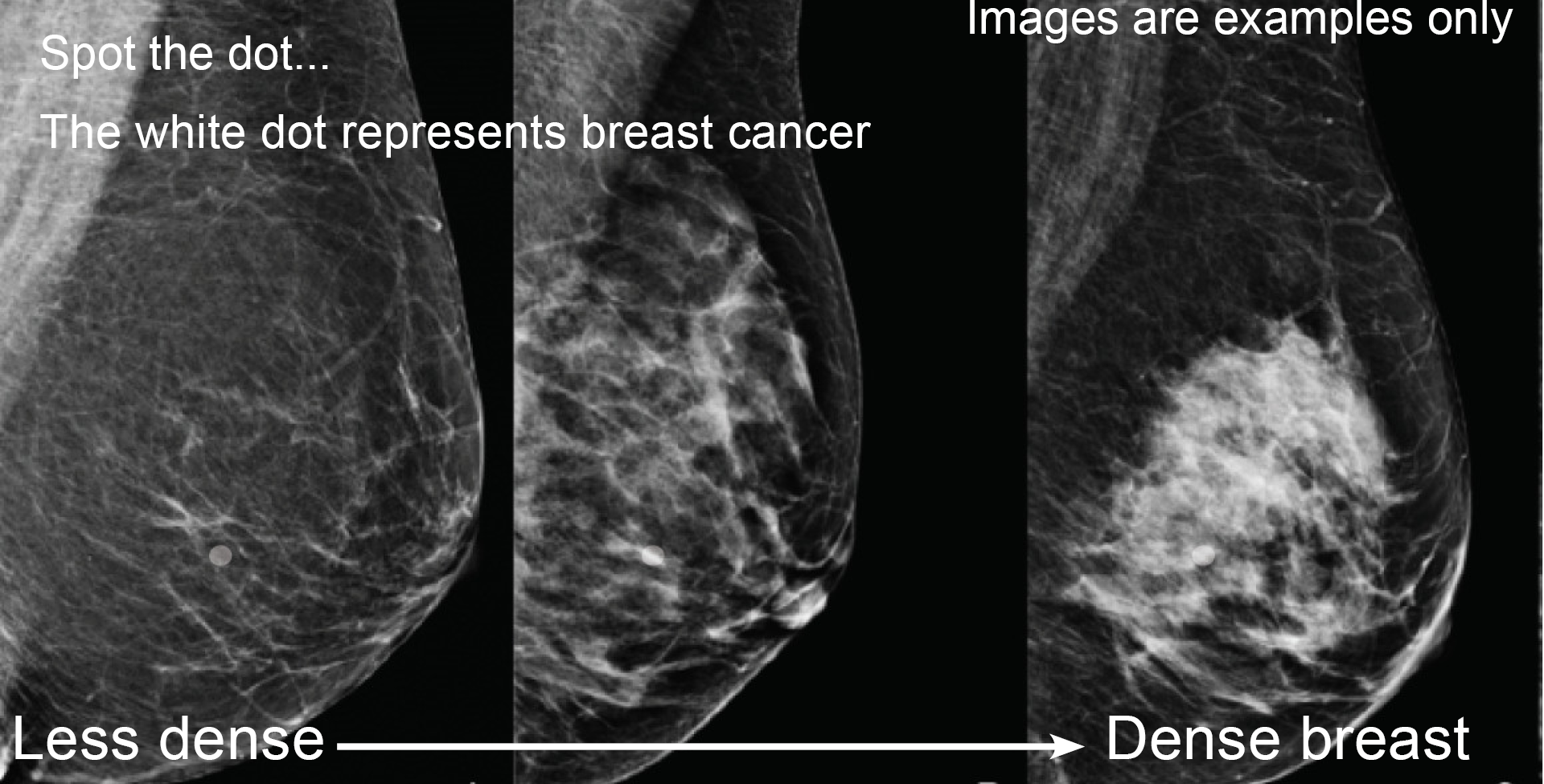
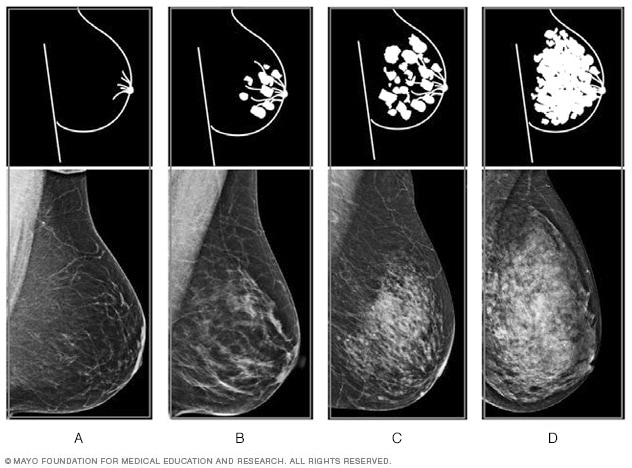
Dense breast tissue mammogram. Doctors will use four categories to rank breast tissue density. Breast cancer patients who have dense breasts are not more likely to die from breast cancer than patients with non-dense fatty breasts. For about half of women screening mammograms reveal they have breast tissue that is categorized as dense.
A cancer masked on a 2D mammogram could still be masked on tomosynthesis unless the cancer is at least partially surrounded by fatty tissue. How do I know if I have dense breasts. Women with dense breasts get the greatest benefit from 3D mammography.
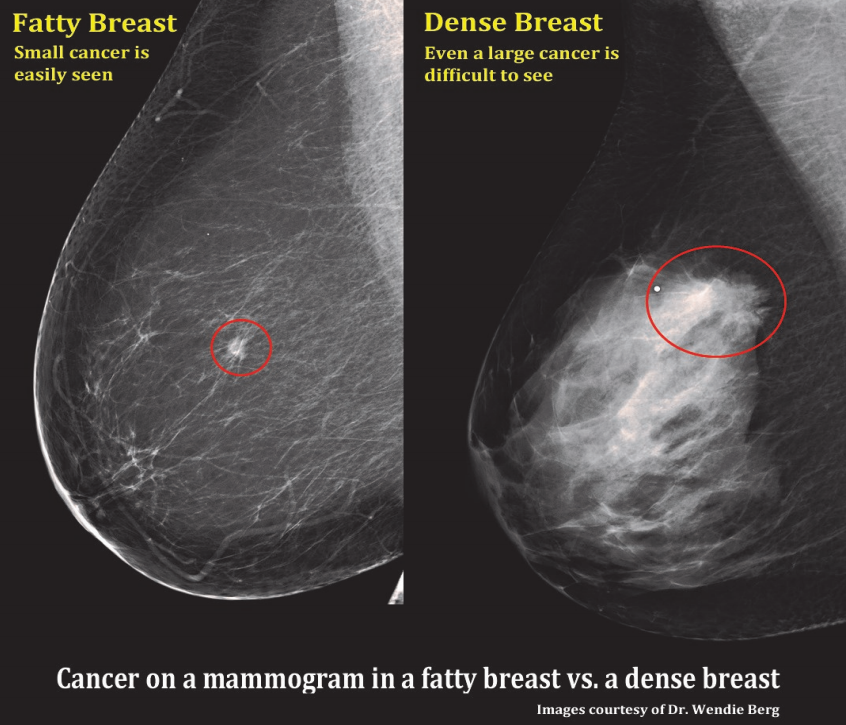
Your provider or radiologist will be able to tell you if your breasts are dense and if the Invenia ABUS 20 screening can be used. Some breast tumors are hidden masked by overlying or surrounding dense breast tissue Fig. Meanwhile some women have dense breast tissue.
Only a mammogram can show if a woman has dense breasts. The term breast density refers to the relative amount of radiopaque epithelial and stromal tissue elements compared with the amount of radiolucent fatty elements seen at mammography Fig 1. Compression flattens the breast to capture an image of it.
The breast anatomy includes lobules ducts fatty and fibrous connective tissue. Breast density is a term that describes the relative amount of these different types of breast tissue as seen on a mammogram. Dense breast tissue can only be seen on a mammogram.
Some breasts are mostly fat fatty breasts and some breasts are mostly breast and connective tissue dense breasts. Dense breasts have relatively high amounts of glandular tissue and fibrous connective tissue and relatively low amounts of fatty breast tissue. Dense breast tissue is common and is not abnormal.
When a breast is easy to see through its easier to detect cancers. How Can Invenia ABUS Help. By creating multiple layers of imaging 3D mammograms can reveal problem areas in dense tissue Dr.
Because its hard to tell the difference between a tumor and dense breast tissue on a mammogram a small. A normal mammogram result is given when cancer is present. A breast with more fibroglandular tissue than fat is considered dense.
As breast density increases the ability of mammograms to show cancers generally decreases which means in some cases. Breast tissue is composed of milk glands milk ducts and supportive tissue dense breast tissue and fatty tissue nondense breast tissue. Essentially mammograms turn a 3D object into a 2D object.
By looking at your mammogram or the measure of breast density your health care provider may conclude you have dense breasts. However dense breast tissue can make it harder to evaluate the results of your mammogram and may also be associated with an increased risk of breast cancer. Dense tissue can hide cancers.
Mammography uses X-rays to detect different densities in the breast including densities that may be tumors. Skin also appears radiopaque at mammography and accounts for some portion of tissue density. So does a possible tumor.
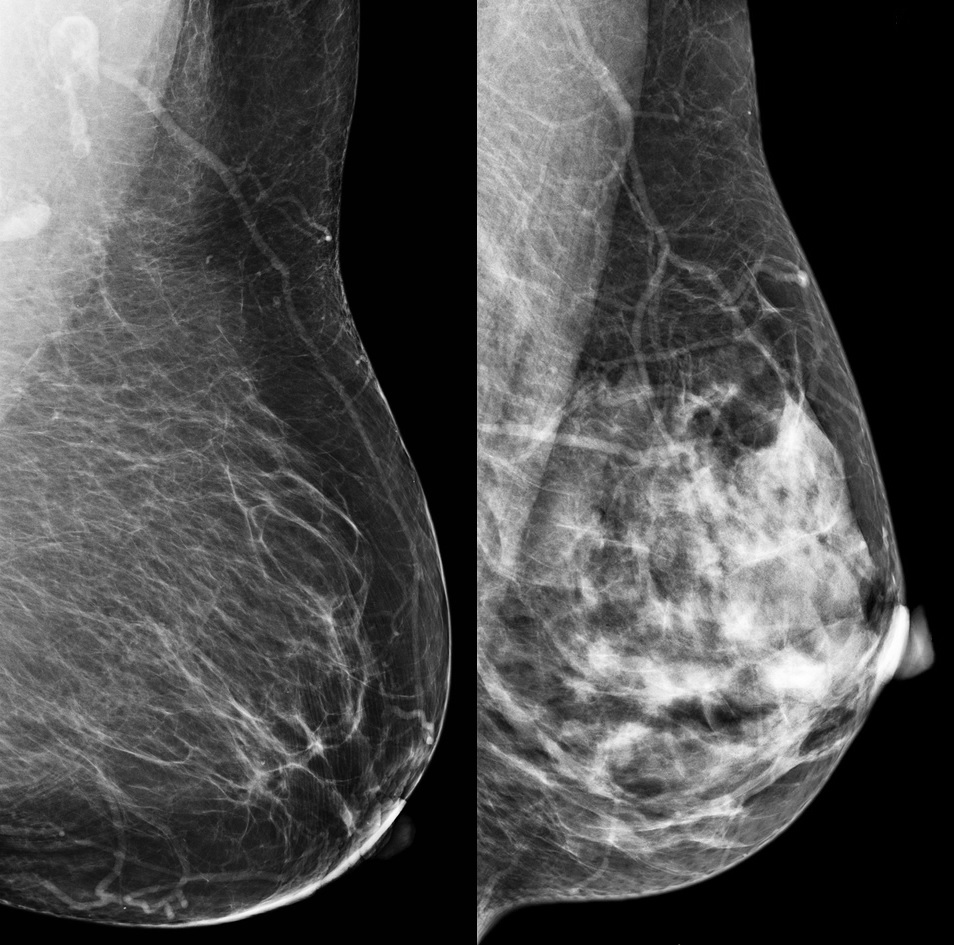
The mammogram images below show a range of breast density. Ourbreast tissue contains different mixtures or varieties in the amount of fatty and fibroglandular substance. A normal mammogram usually looks mostly gray with a little white showing dense breast tissue thats healthy.
Fibrous and glandular tissue looks white on a mammogram. All mammograms use x-ray technology and dense tissue absorbs more x-rays than fatty tissue. Dense breast tissue is normal seen in 40-50 percent of women and is a risk factor for breast cancer.
The language used in the report may be mandated by law and say something like Your mammogram shows that your breast tissue is dense. A woman is called. While fatty tissue appears dark on a mammogram dense tissue appears white.
How does dense breast tissue look on a mammogram. However dense breast tissue can make it harder to evaluate the results of your mammogram and may also be associated with an increased risk of breast cancer. Breast tissue may either be called non-dense more fatty or dense less fatty with more fibroglandular tissue.
Dense breast tissue is common and is not abnormal. Dense tissue like glands appears white in the image. When a woman is young under 50 or premenopausal the breasts are more dense according to the mammogram.
Its a normal and common finding. This can make it tougher to see tumors since dense tissue also looks white. 1 Knowing whether you have dense breasts is important because.
This is because dense breast tissue and breast cancer both appear white on a mammogram - as a result the cancer can be masked by dense tissue. When you get older the breasts become mostly fat and are easy to see through. Your mammogram shows that your breast tissue is dense.
A mammogram is an X-ray of the breast that allows a doctor to identify potentially cancerous lesions in any dense breast tissue. For screening mammograms the breast is compressed in two ways from top to bottom and from side to side.
Dense Breast Tissue What It Means To Have Dense Breasts Mayo Clinic

Dense Breast Tissue Uw Health Madison Wi
Breastscreen Wa
What Does It Mean To Have Dense Breasts Cdc
Fibroglandular Densities Mammographic Breast Density Itn